Calcium sparklets, TRPV channels and vanilla

     Calcium sparklets are not a good thing, not in excess at least. This is just a few interesting articles that have TRPV channels in common. The calcium channels cause problems in a variety of ways for some people. Identifying who is at risk for problems with fluid balance could help prevent the chronic degenerative changes that can result from electrolyte imbalance. (This post led to parts of this webpage: effectivecare.info/G3. Relaxation & Stress)
     I was amused when the search term ‘sparklets’ turned up something pertinent to my field of interest. TRPV channels and vanilloid receptors with overactive calcium flow can increase pain and other types of muscle and nerve signals.

Calcium sparklets are not a type of chewing gum. They are a sudden increase in flow of calcium through certain calcium channels in vascular tissue. A specific chemical trigger called protein kinase Calpha (PKCalpha) was found to signal L type calcium channels into increased calcium flow [3]. The sparklets occurred in diabetic vascular tissue following high blood sugar levels [2]. A cooperative action taking place with as few as three calcium channels needing to be open for maximal vasodilation to occur [1].
TRPV4 are a type of vanilloid receptor. Loss of function due to genetic difference has been associated with hyponatremia, low sodium blood levels. [6]

“TRPV4 is activated by hypotonicity in vitro, and perturbations of even a few mOsmol/kg H2O were sufficient to achieve this effect (5–7); such exquisite sensitivity closely parallels the in vivo mechanism whereby a change of only a few mOsmol/kg H2O influences release of arginine vasopressin. In rodents, TRPV4 is expressed in the blood–brain barrier-deficient central osmosensing nuclei (5, 35), and targeted deletion of the TRPV4 gene gives rise to aberrant osmoregulation in murine models (20, 21).” [6]

     Time to bake something with vanilla. The above paragraph’s reference to a blood-brain barrier deficiency having a genetic component suggests that susceptibility to headaches also could have a genetic component. The change in osmoregulation means that membranes could be more resistant to fluid and particles crossing or more open and barrierless (and  prone to get migraines). The problem could combine a deficiency in ability to transport needed nutrients into the cell with an increase in leakiness of important things out of or into the cell. The lack of nutrients like magnesium would further reduce the calcium channel blocking potential of the cell.
     So is vanilla something that some people genetically need more of? good question. And the bigger bell ringing loud was the risk of hyponatremia means that a low salt diet could lead to even lower levels of sodium in the blood.
     TRPV receptors have to do with pain control as well as flow of fluid and electrolytes (osmoregulation). Vanillin receptors can have a calming effect on the body and sooth pain. Baked goods with vanilla have a little extra besides love soothing the body. (So does hot pepper though – capsaicin).
 

Magnesium flow through the proton gates that the TRPV group of receptors control is what helps reduce  pain (when there is enough magnesium) and what causes pain signals when there isn’t enough to protect the cell interior from calcium entry. Calcium signals overwork, which leads to pain.
Calcium channel blocker medications are trying to close the gates and keep the calcium out – magnesium would be super delighted to do that if enough were being absorbed from the intestines (too full of calcium and active hormone D3).

     A study on the use of magnesium with opioid pain killers demonstrated the power of magnesium’s effect on for helping reduce diabetic pain. Diabetics normally do not find pain relief from opioids but when magnesium was given in advance the pain killer worked – and the pain killing effect continued for three days after the opioid medication effect would have worn off. The research discussion seemed to focus on using 30 mg with IVs of  morphine or other opioid and didn’t not address the fact that the 300 mg dose had reduced pain on its own, without opioid medication. [18]
 
  • by Sonkusare SK et al, Elementary Ca2+ signals through endothelial TRPV4 channels regulate vascular function. Science. 2012 May 4;336(6081):597-601. [ncbi.nlm.nih.gov/pubmed/22556255]
  • Calcium and diabetic vascular dysfunction, Focus on “Elevated Ca2+sparklet activity during acute hyperglycemia and diabetes in cerebral arterial smooth muscle cells,  by Katherine M. Dunn, KM and Mark T. Nelson (11/11/09 Am J Physiol Cell PhysiolFebruary 1, 2010 vol. 298 no. 2 C203-C205) “This report is also the first to describe a molecular mechanism by which hyperglycemia produces increased [Ca2+]in VSM and suggests that this mechanism of Ca2+ sparklet activation may be uniquely initiated by hyperglycemia.”    [ajpcell.physiology.free article]
  • Article by Amberg GC et al “Calcium sparklets regulate local and global calcium in murine arterial smooth muscle” J Physiol. 2007 Feb 15;579(Pt 1):187-201. Epub 2006 Dec 7. [Free article]
  • The first three are from a search for ‘sparkles’ in pubmed, no sparkles-but autosuggester came up with ‘calcium sparklet’ and the whole list looks interesting: [ncbi.nlm.nih.gov/pubmed?term=calcium%20sparklet]-Truth can be stranger than fiction.

4. A different search ‘magnesium deficiency hyperglycemia‘ provided a summary worth reading :  Magnesium and Potassium in Lone Atrial Fibrillation, by Patrick Chambers, MD, pdf file: [afibbers.org/resources/PCmagnesium.pdf] *** this needs to be added to the IoM 1997 report on magnesium. Lefthandedness section near the bottom notes an increase calcium flow across cell membranes in left handers. A genetic difference that can lead to an increase in the isoprenoid pathway and inhibition of Na/K pumps in the membranes is suggested to occur in some left handed people. The difference can lead to an increased need for magnesium.

5. Reminder – vascular calcification is somewhat reversible and a simple way to start is to add less by limiting the amount of calcium taken in daily. Two servings a day of calcium rich foods is adequate for most people; there is also calcium in smaller amounts in many other foods too. Calcification of Soft Tissue, hardening organs and softening bones (post, 8/19/11 )

6. A loss-of-function nonsynonymous polymorphism in the osmoregulatory TRPV4 gene is associated with human hyponatremia, by Wei Tian, et al [pnas.org/content/early/2009/08/03/0904084106.full.pdf]

7. Physiology and Pharmacology of the Vanilloid Receptor, by Angel Messeguer, Rose Planells-Cases, and Anton Ferrer-Montiel (Curr. Neuropharmacol., 2006 January: 4(1) : 1-15) [link]

Excerpt:  In addition to the contribution of the vanilloid receptor as a target of the neurogenic inflammation underlying different diseases, TRPV1 is gaining interest for the treatment of neuropathic, postoperative and chronic pain and, recently, for the therapy of epithelial disorders. Thus, for instance, topical capsaicin or resiniferotoxin have been used in postherpetic neuralgia, diabetic neuropathy, postmastectomy pain and arthritis [64,103]. Recently, TRPV1 has been clearly validated as a key target for management of chronic pain in bone cancer [42]. As a result, the development of specific TRPV1 antagonists is a central focus of current drug discovery

***antagonist equals block – the vanilloid receptors are also involved in soothing – feed and educate the receptors because they all serve multiple purposes. Pain has a purpose – to signal that something is wrong. Masking pain with antagonists that deaden a function – to signal a problem – was a very disappointing climax to that paragraph. TRPV1 receptors and all the rest of the gang are very exciting – let’s not waste more money and time inventing synthetic antagonists to a message system that is very intertwined in controlling gates and flow of substance. the pain is there for a reason – starvation – lack of building blocks – lack of function.

8. More on vanilla from “Confessions of a Cardamom Addict” blogspot – blog part one–  –blog part two – ***These cover the history, processing, environmental concerns, major botanical varieties.

18(vit D bib.). [ncbi.nlm.nih.gov/pubmed/20081245] Magdalena Bujalska, Helena Makulska-Nowak, Stanis³aw W. Gumuka Magnesium ions and opioid agonistsin vincristine-induced neuropathy , Department of Pharmacodynamics, Medical University of Warsaw, Krakowskie Przedmieoecie 26/28, PL 00-927 Warszawa, Poland

Disclaimer: Opinions are my own and the information is provided for educational purposes within the guidelines of fair use. While I am a Registered Dietitian this information is not intended to provide individual health guidance. Please see a health professional for individual health care purposes. Thanks.
Yemen in the News

Our actions have consequences. The United States of America is a baby nation compared to most other countries. Stewardship of the land has been disrespected since white man first invaded America and now corporate outsourcing is sending bad business practices into other people’s back yards.
Why would citizens in Yemen want a pipeline that takes their limited resources, most of the profit and ruins their land? Some of them don’t like the pipeline that is owned and operated by foreigners but is located in their backyard.

  • A suicide bomber was killed along with 90+ Yemeni soldiers. The Al Queda response stated that the attack was in  “retaliation for the Yemeni army’s attacks and U.S. drone strikes in the southern part of the country.” [link(5/21/12)]
  • A spy infiltrated an Al Queda cell and brought out a bomb by pretending to be a suicide bomber. [link(5/8/2012)]

The law of supply and demand suggests that the Al Queda resistance won’t stop until the demand for freedom from foreign occupation is addressed.

/Disclaimer: This information is provided for educational purposes within the guidelines of fair use./

Prostate and breast cancer and omega 6s and 3s

     A study [1] found significant differences in the amount of omega-6 and omega-3 polyunsaturated fatty acids levels in tissue taken from benign and malignant prostate cancer tumors from within the same prostate specimen. Malignant tissue samples were found to have less total omega-6 fatty acids then the benign samples. The tissue levels of the specific types were also different.
The malignant tissue had more of the dihomo-gamma-linolenic acid (DGLA) (C20:3w6) an omega 6 fatty acid and precursor to other omega 6 metabolites. There was significantly less of two omega 6 fatty acids. Arachidonic acid (AA) (C20:4w6), and adrenic acid, (C22:4w6) were at lower levels  in cancer tissue that was malignant compared to tissue that was benign. The abstract to the study concludes with the statement “These findings provide additional evidence that dietary fat is associated with prostatic carcinogenesis.”
     It seems to me that if the samples were simply from different areas of the same specimen that the same human would have been eating the same dietary fats. The two types of tissue from within the same gland would have received the same blood flow and nutrients. So  the malignant tissue had less AA and adrenic acid and less total omega 6 fatty acids but more DGLA than the benign tissue. So something is happening in that malignant tissue that isn’t happening in the benign tissue and the net effect is loss of total omega 6 content. Something else has to be associated with the malignant prostatic carcinogenesis because the dietary fat is going to both the benign and the malignant tissue.
     Elsewhere information has been discovered that malignant prostate cancer cells can make an enzyme that can convert Arachidonic acid into a form usable as a food source for the malignant growth. Increased intake of CLA and ginger may help preserve arachidonic acid from being converted to 5-HETE which the cancer cells can use as an energy source. [Ginger slows prostate cancer growth] (10/20/2011) So targeting the enzyme  that converts AA to 5-HETE would make more sense than wondering what omega 6 and omega 3 ratio on the person’s plate might turn malignant cells back into benign ones. /speculation – The fat ratio in meals may have some effect  on slowing or speeding the growth rate of the cancer cells but it is unlikely to be able to change it back to benign. Some information suggests that malignancy might be preventable and that cancer metastasis might be reduced by avoiding animal products that are rich in free AA. donmatesz
AA forms part of the structure of membranes under normal conditions. AA can be converted from lecithin and combined with ethanolamine to become anandamide, an endogenous cannabinoid (eCB). Lab tests find free AA after it has been broken down from eCBs in response to inflammatory signals.
     The eCBs in times of health are part of the membrane structure and there would be little free AA. Controlling the diet for excess calcium and glutamates may help in addition to adding conjugated linolenic acid (CLA) and ginger. The omega 3s and omega 6s are groups of various chemicals that do not have the same functions and their risks and benefits may vary based on individual differences.
Adequate omega 3 fatty acid is important for heart health and mental health. They have been found helpful for depression, diabetes (ALA) and other diagnoses.
     /speculation/ Linolenic acid and omega 6’s may have gotten a bad name partially because larger research studies may not have excluded people with undiagnosed prostate or breast cancer. Their negative responses to a diet high in LA may have skewed the results of other people with normal tolerance for foods with LA or animal products rich in lecithin or AA (chicken, eggs and beef are the richest sources).
/speculation #2/ Over cooking the food source may increase the amount of free AA that is released. Differences in how foods were prepared for the different studies may have modified the results.
  1. A comparative study of tissue ω-6 and ω-3 polyunsaturated fatty acids (PUFA) in benign and malignant pathologic stage pT2a radical prostatectomy specimens.Schumacher MC, Laven B, Petersson F, Cederholm T, Onelöv E, Ekman P, Brendler C.  Urol Oncol. 2011 Mar 31. Department of Molecular Medicine and Surgery, Karolinska Institutet Department of Urology, Stockholm, Sweden.PMID: 21414816  [ncbi.nlm.nih.gov/pubmed/21414816]
  2. ***infertile men had more omega 6 (AA) and less omega 3  than fertile men. [ncbi.nlm.nih.gov/pubmed/19666200]
  3. ***supplementation with GLA in attempt to modify inflammatory blood chemistry. It worked somewhat.  [ajcn.org/content/77/1/37.full]
  4. [walnuts.org/alphalinolenic-acid/]
Disclaimer: This is provided for informational purposes only. Please see a health professional for individual health care purposes.

Orange Buckwheat Cake tastes a little like rainbows

This is a quick bread with ratios similar to a rich muffin or cake like brownie. Oat flour may have traces of gluten but it helps reduce the crumbliness of buckwheat, millet and corn flour products.
  • I have been focusing on developing recipes that use less commonly used ingredients that are rich in phospholipids and other nutrients. Rotating in more unusual ingredients into the weekly or monthly diet adds trace nutrients. Coconut and walnuts add variety to the types of fats in the diet. The saturated and mono-unsaturated fats benefit the diet by improving the ratio of omega 6 and omega 3 fatty acids but without having to add animal based fats. Omega 6 polyunsaturated fatty acids are found more in oily seeds, while olive oil has a higher ratio of mono-unsaturated fats and coconut is rich in saturated fats. Walnuts are a good source of omega 3 fatty acids to the point that excessive daily use could lead to problems with blood clotting and bruising easily.
  • The fat content of a meal also is needed for the stomach to tell the brain that the meal was satisfying and that eating could stop.
    Variety and moderation are the essential factor to a healthy diet. Using a variety of whole food ingredients in the daily diet boosts intake of trace nutrients and other phytochemicals. Many important antioxidants are also the actual pigment colors in the plant.
  • Taste a Rainbow” of fruits and vegetables is a campaign that some school lunch programs have embraced. The changes in the school lunch program had been anticipated since 2009. Registered Dietitians in larger school districts have been revamping menus since then. Student participation has been encouraged with sampling days where new vegetables or other foods are available for everyone to try even if they brought a sack lunch.
  • Produce requirements have doubled from requiring that 1 and 1/2 servings of fruit and vegetables be offered per meal to 2 servings of vegetables and one of fruit (roughly- the numbers are listed in cups).
  • The following article adds that “French Fries” that are served in school cafeterias have been baked for years and frequently are sweet potato fries. According to the following article in the magazine, Today’s Dietitian, deep fryers are not generally found in school kitchens. :  [New Standards Unveiled for School Lunches – Soon Kids Will Be Eating More Fruits, Veggies, and Whole Grains, by Lori Zanteson,  todaysdietitian Vol,. 14 No. 5, p 14]
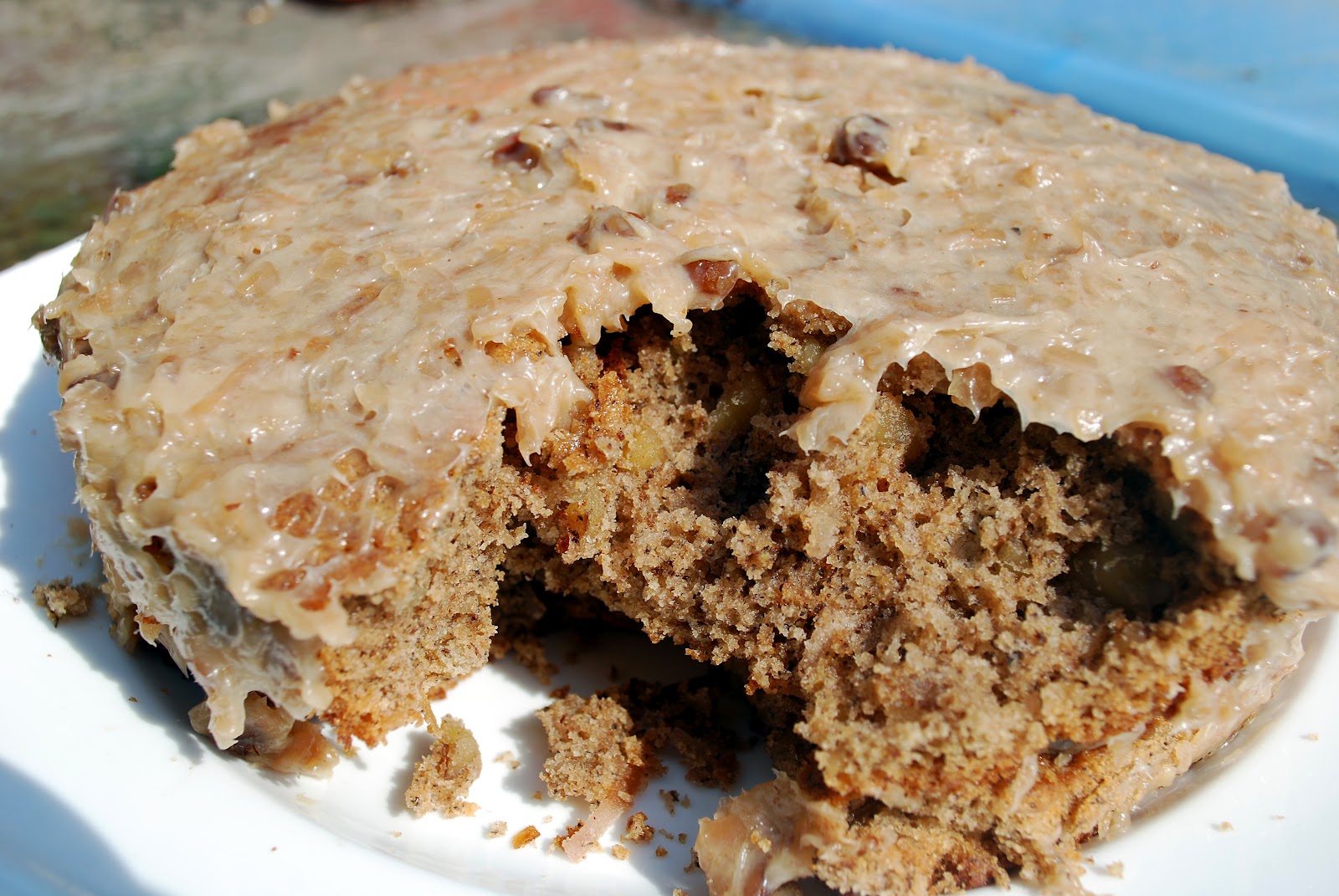
Trial Three showing the interior texture. I ran out of frosting.

Orange Buckwheat CakeTrial 1
Makes one 8 inch by 8 inch pan, bake at 350’F for about 35-40 minutes
***This combo is good but a little dry and stringy. Commercially purchased Coconut Pecan Frosting was the perfect finish which led to Trial Two with raisins and walnut additions.

1 cup Buckwheat Flour
1/2 cup Oat Flour
1/2 cup Sugar
1/2 cup Coconut Flakes
1/2 tsp Salt
1 1/2 tsp Baking Powder
2 Eggs
1/2 stick/ 4 Tbs Butter melted or 1/2 cup Oil
1/2 tsp Orange Oil Extract
1 tsp Vanilla
1/2 cup Apricot Nectar or Orange Juice

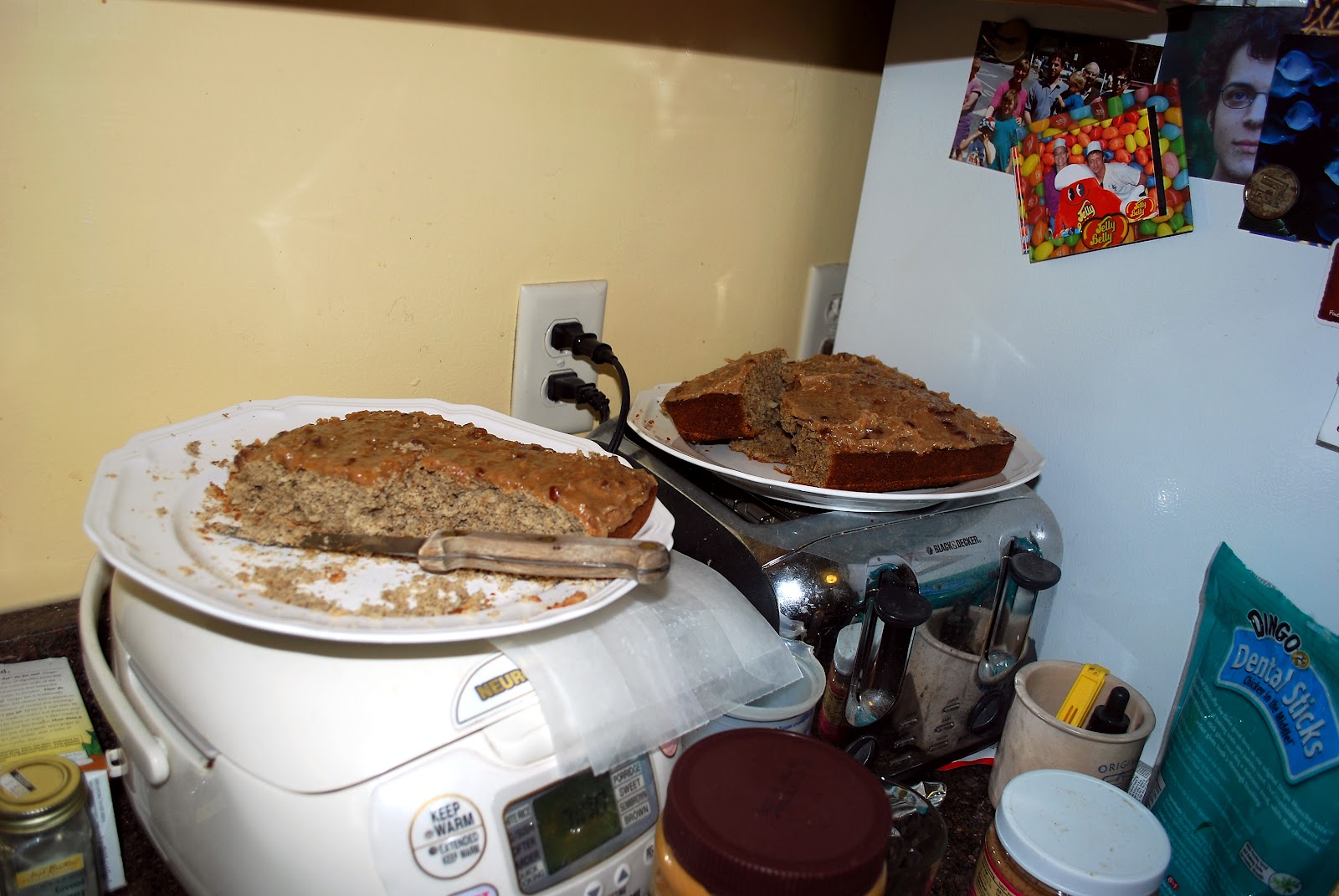
Trial one and two = lots of cake to eat.

Orange Buckwheat Cake – Trial Two – I’m aiming for a variation of Carrot Cake. the coconut by itself stands out as an odd stringy texture that suddenly needs to be chewed more than the rest of the quick bread. When carrots and coconut are used with raisins or chopped nuts the combined textures and shapes blend into a mixture that makes chewing expected and more natural.

1.  Let soak while gathering the other ingredients:    Trial Three – the raisins were a little odd but the level of moistness was better.)

5.5 oz can Apricot Nectar                             2/3 cup Orange Juice

1/2 cup Golden Raisins                                 1/2 cup Coconut Flakes

1/2 cup Coconut Flakes                               1 cup chopped Walnuts or Pecans

1/2 cup Chopped Walnuts

2. Whisk Dry Ingredients together:

1 cup Buckwheat Flour                               3/4 cup Buckwheat Flour

1.2 cup Oat Flour                                       3/4 cup Oat Flour

1/2 cup Sugar                                             3/4 cup Sugar

1/2 tsp Salt                                                  1/2 tsp Salt

1 1/2 tsp Baking Powder                             1/2 tsp Baking Soda

3. Beat the eggs and oil and then add to the flour along with the soaking fruit and nut mix.

2 Eggs                                                        2 Eggs

1/2 cup Oil                                                  1/2 cup Oil

1/2 tsp Orange Oil Extract                           1/2 tsp Orange Oil Extract

1 tsp Vanilla Extract                                     1 tsp Vanilla Extract

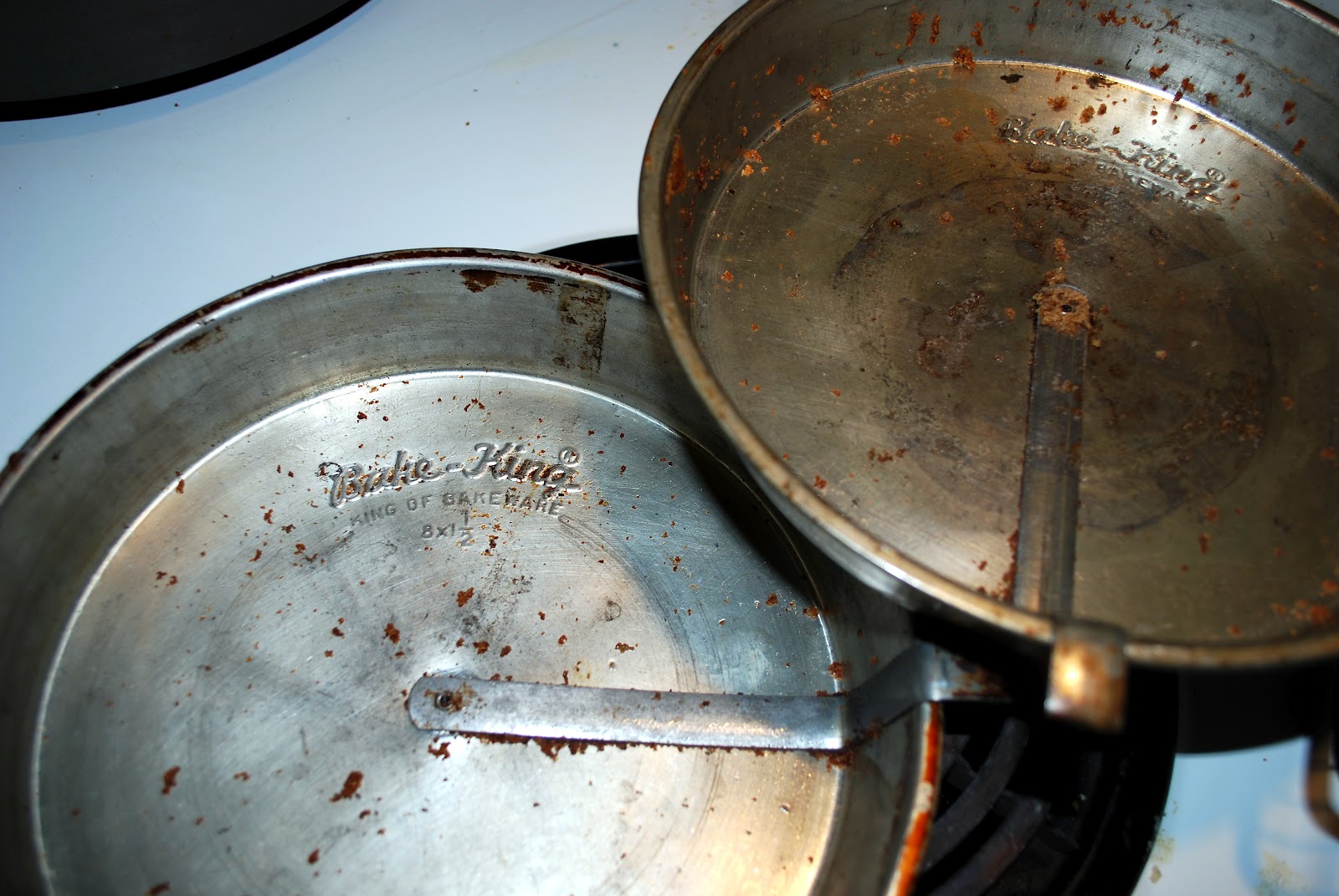
Bake King cake pans with sliders. eBay

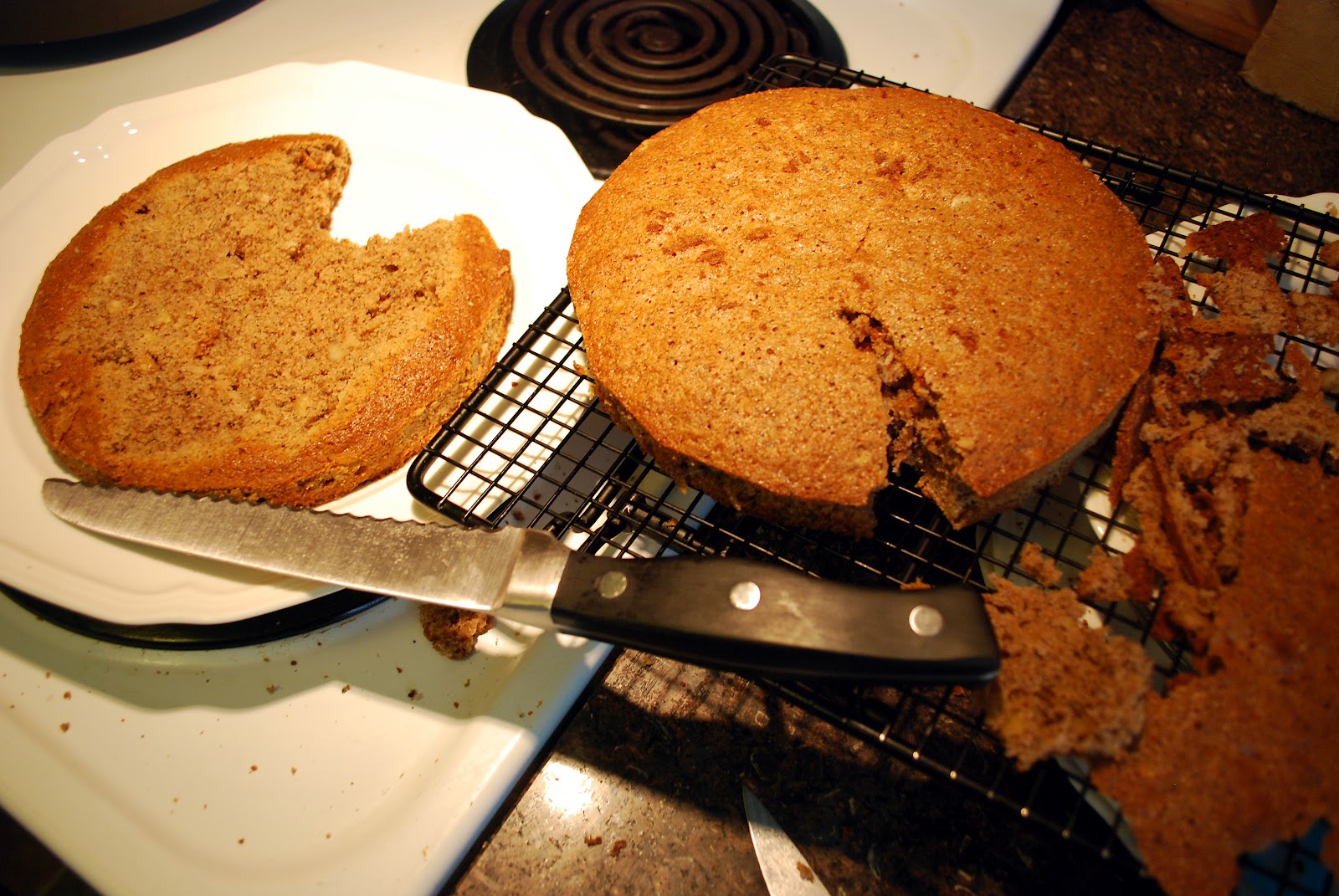
4. Bake in a 8 in by 8 in square pan for 45 minutes or  in two 9 inch round cake pans for about 35 minutes or when they pass the clean knife blade test and the center springs up lightly when pressed.

*** I put Trial Three in two cake pans. The batter is excessive for one pan but a little short for two. Trial Four, eventually, will test a larger batch size of Trial Three to better fill two cake pans with no other modifications to the ratios or ingredients. It’s good just short and dense.

My mother used the Bake King cake pans with a center slider. Buttering or oiling the pan and then sprinkling that with flour is the traditional method for improving the chance of getting the cake out of the pan unbroken.

Some bakers trim the edges and flatten one layer before frosting.

PS – The orange extract is good with the strong flavor of the buckwheat but just the vanilla would probably also be good. I  used Apricot Nectar in Trial One and Two because it is less acidic than orange juice. If using orange juice substitute 1/2 teaspoon of Baking Soda for the 1 1/2 teaspoons of Baking Powder. The Baking Powder has an acidic component that would be unnecessary if Lemon Juice, Buttermilk or Orange Juice are used in the recipe.

PPS: The orange juice plus baking soda worked very well in Trial Three.

PPPS: This type of frosting is traditionally used on German Chocolate Cake and only the top of the layers are frosted. The crisp edges would not be trimmed away when using Coconut Pecan Icing.

  • Ovenex Cake Pans with Sliders -[link] a brand that seems comparable to Bake King. The center of the cake pans have a slider attached that cuts the cake loose from the bottom of the pan. The center of Trial Two stayed behind as I removed the cake from the square pan.